

How Agents Build Neighborhood Market Share
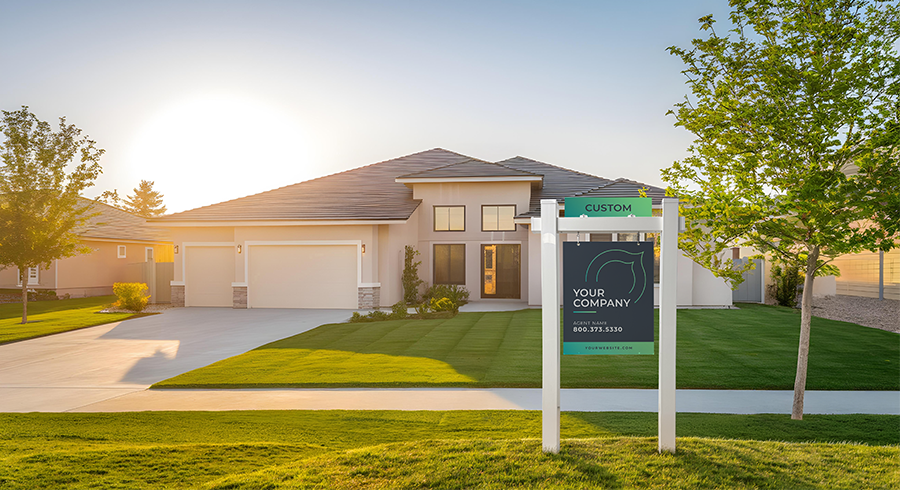
There's a version of real estate success that doesn't come from cold calls or viral posts. It comes from being the name everyone in a neighborhood already knows, before they ever think about selling. The agents who consistently win listings in a specific area aren't always the loudest online. They're the most visible on the ground, showing up at every listing, every open house, and every corner turn. Over time, that presence becomes trust. And trust becomes market share.
By early summer, many agents refocus energy away from transaction volume and toward longer-term pipeline building. Neighborhood farming is exactly that kind of investment; a deliberate, compounding strategy built on consistent visibility. This guide walks through how it works, what tools make it sustainable, and how your signage does more selling than most agents realize.
- What Real Estate Farming Actually Means
- Why Repeated Exposure Is the Strategy
- How Signage Builds Recognition Over Time
- Open House Visibility as a Farming Multiplier
- Cohesive Branding Across Every Listing
- How to Start (or Strengthen) Your Farm Area
- The Long Game: What Consistent Presence Builds
- Frequently Asked Questions
What Real Estate Farming Actually Means
Real estate farming means choosing a specific geographic area, a subdivision, a zip code, a cluster of streets, and systematically building brand recognition there over time. The goal isn't to close one deal. It's to become the default name residents think of when someone on the block puts up a sign.
It's a long-term play, but the math works. In most neighborhoods, a handful of agents handle the majority of listings. Those agents didn't get there by accident. They built recognition through repetition, direct mail, community involvement, and most visibly, a consistent physical presence at every listing in that area. The barrier to entry is surprisingly low. What it requires is consistency, not budget.
Why Repeated Exposure Is the Strategy
Marketing research has long pointed to the concept of the "Rule of 7," the idea that a prospect needs to encounter your brand roughly seven times before taking action. In real estate, that exposure happens across multiple touchpoints: a mailer, a social post, a door knock. But nothing reinforces your name in a neighborhood quite like a physical sign planted in a front yard.
Neighbors notice signs. They see them on their morning walk. They drive past them twice a day. They watch them go from For Sale to Sold. When that sign consistently carries the same agent name, the same logo, and the same professional look, across multiple listings and over multiple months, the association becomes automatic. That's not coincidence. That's a branding strategy executing exactly as intended.
How Signage Builds Recognition Over Time
Most agents think of a yard sign as a listing tool. High-performing agents treat it as a neighborhood marketing asset, one that works around the clock, on every street they serve. Here's how each piece of that system does its job.
Start With the Panel
The panel is the anchor; the first thing a neighbor sees when a new listing hits the block. A brand-consistent, professionally printed panel communicates competence before anyone picks up the phone. For agents farming a specific neighborhood, a back-to-back unit takes that visibility further, presenting your brand to traffic from both directions on a single post. Where a standard panel speaks to one side of the street, a double-sided unit works the whole block.
The quality of the panel matters too. A sign that fades after one summer or warps in the rain sends a subtle message to every neighbor who drives past it. Premium materials communicate premium service before a seller ever meets you. When your panel looks sharp on week twelve of a listing as it did on day one, that durability reflects directly on your brand. In a farm area where the same neighbors see your signs repeatedly, that standard becomes part of your reputation.
Riders That Follow the Listing Cycle
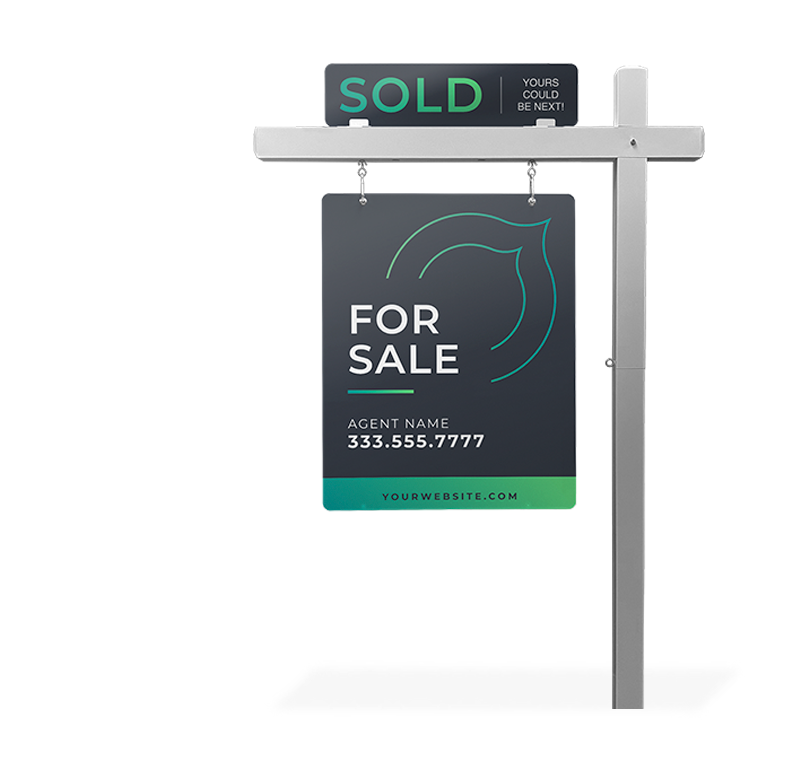
A rider clipped beneath the panel (Just Listed, Under Contract, Sold) tells a story that neighbors follow in real time. They watch a listing come to market, move through the cycle, and close. That narrative, repeated across multiple properties, is what builds the perception of an agent who gets results in this neighborhood. Each status update is another impression, and another reason for a curious neighbor to take note of your name.
Expand Your Footprint on Open House Weekends
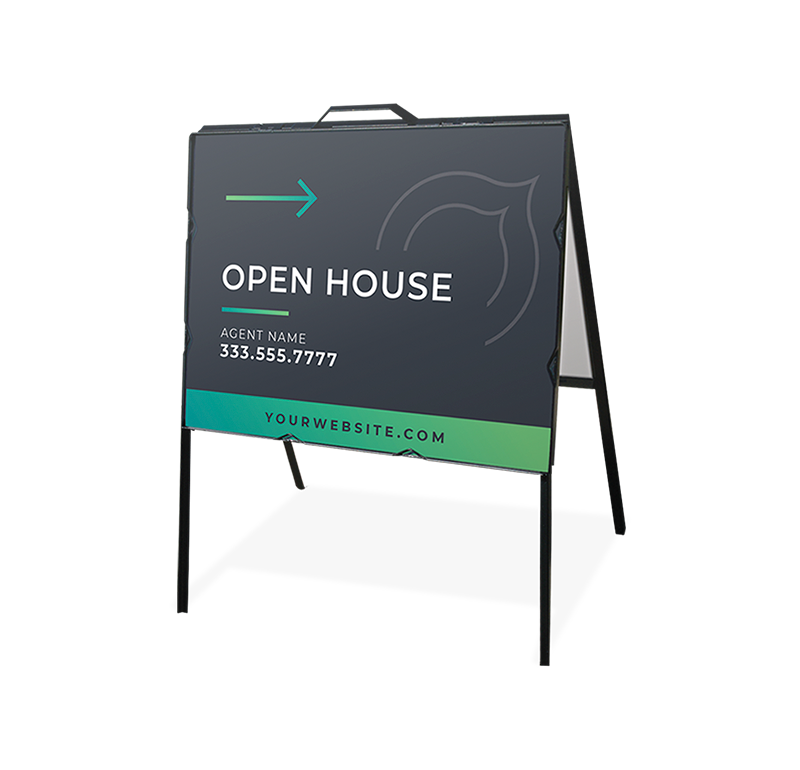
Directional signs posted at nearby intersections don't just route buyers to the door; they put your name on every corner within a three-block radius. Neighbors who weren't planning to attend the open house still see your brand five times before lunch. That's not foot traffic; that's brand frequency, and it compounds with every weekend you're active in the neighborhood.
Add a banner at the curb and a single listing becomes a visible neighborhood event. The goal isn't just to fill the open house; it's to make your presence impossible to miss for the people already living on those streets. The buyers who walk through the door matter for this transaction. The neighbors who drive past your directionals matter for the next five.
The Details That Work After Hours
A brochure box mounted on the post keeps your marketing working after hours, giving curious passersby something to take home. Solar sign lights ensure your listing stays visible after dark, reinforcing your name even on a quiet Tuesday evening walk. And when a deal closes, a closing sign makes the result public, turning a transaction into a local proof point that neighbors remember. Even off-property touchpoints, like vehicle signs and name badges, reinforce the same brand every time you show up in the neighborhood. When every piece of your physical presence looks like it belongs to the same system, recognition doesn't just build. It sticks.
Open House Visibility as a Farming Multiplier
Open houses are commonly evaluated by buyer attendance. But for neighborhood farming, the more important audience is often the neighbors themselves.
Sellers often attend open houses in their own neighborhood out of curiosity. Neighbors who've been considering listing take note of how you conduct yourself, how your marketing looks, and how professionally the property is presented. First impressions made at open houses frequently turn into listing calls months later.
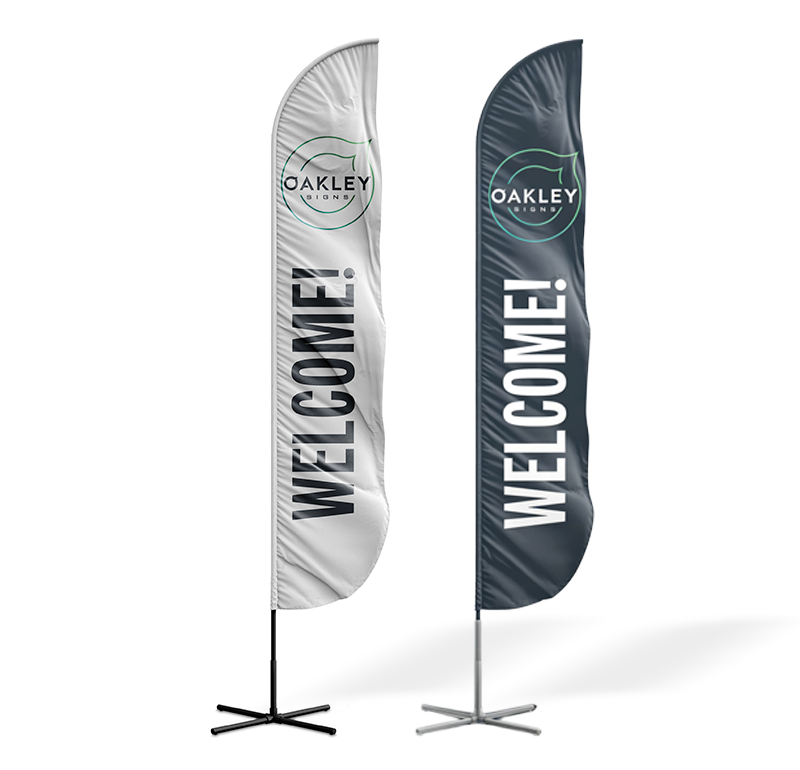
That's why your open house setup matters as much as the event itself. A flag at the driveway entrance signals activity from a distance, pulling in both foot traffic and the attention of neighbors passing by. Unlike a sign post that requires a driver to slow down and read it, a flag catches the eye immediately, even from a moving car. It marks the property as active and in-demand, before anyone sets foot on the lawn.
Flags also work in tandem with the rest of your sign setup in a way that most agents underestimate. When a neighbor sees a flag at the driveway, a branded panel at the curb, and a directional at the corner they just turned, the combined impression is one of a well-organized, professional operation. That perception carries weight. Paired with a cohesive sign package, matching panel, riders, and directionals, it signals the same level of care you'll bring to their listing.
It's a live portfolio of your work, visible to the exact people you're trying to win as future clients. Every open house is an audition. Make sure the staging extends all the way to the street.
Cohesive Branding Across Every Listing
The fastest way to undermine a farming strategy is inconsistency. If your panels use one logo, your riders use a different font, and your flags look like they came from three different vendors, the visual impression fractures. Neighbors don't consciously register this, but they feel it.
Brand consistency is what turns repeated exposure into recognition. Every piece of signage you place in a farm area should feel like it belongs to the same system: same colors, same logo placement, same quality of print. When a homeowner calls you because they've "seen your signs everywhere," that's cohesive branding doing exactly what it's supposed to do.
Oakley Signs offers fully customizable sign systems, panels, riders, flags, and directionals, built to brand standards that hold up whether you're managing one listing or a full pipeline across a neighborhood. Elite Agent Kits are specifically designed to give agents, teams, and brokerages a consistent, complete setup from day one.
How to Start (or Strengthen) Your Farm Area
If you're beginning a farming strategy this summer, here's a practical framework to build on:
Define Your Territory
Choose a neighborhood or zone with enough annual turnover, typically 5 to 7 percent of homes or more, to support consistent activity. Smaller and tighter is better than large and scattered. A focused farm area means your signs overlap, your open house directionals point neighbors past your other listings, and your brand impression compounds faster. Aim for 200 to 500 homes as a starting point; enough to generate activity without spreading your presence too thin.
Commit to a Visual Standard Before Your Next Listing
Order a complete sign package before your next listing goes live, not just a panel and a rider, but the full setup: directionals, flags, a brochure box, and branded accessories. Treat every listing as a neighborhood marketing event, not just a transaction. The investment is modest; the impression it creates is not.
Track Your Visibility Every 90 Days
After the first quarter, take stock of how many homes in your farm area have featured your signage. Map it out if it helps. Set a goal for the next 90 days. Visibility compounds; every sign builds on the last, and every neighbor who sees your name twice is closer to calling you first. Tracking makes the compounding visible, and visible progress sustains the effort.
Close the Loop Publicly on Every Sale
Use Just Sold riders and a closing sign to make every result public. Neighbors respond to proof. A sold sign in a yard is the most credible endorsement you can display, and in a farm area, it's seen by exactly the audience you're trying to earn. Don't pull the sign the day escrow closes. Let the neighborhood see the outcome.
The Long Game: What Consistent Presence Builds
Agents who dominate a farm area don't get there in a quarter. They get there because they showed up, listing after listing, open house after open house, until their name became synonymous with the neighborhood itself.
The payoff is real:
- Sellers call before they're ready because your name is already top of mind.
- Inbound inquiries replace cold outreach as recognition builds.
- Buyers associate you with local expertise, not just transaction execution.
- Competing agents face an uphill battle the moment your brand is established in the neighborhood.
Your signage is the most consistent, most visible, and most cost-effective piece of that presence. It works while you're in appointments. It works while you're sleeping. And in a neighborhood you're farming, it works every single day.
Build the Presence That Earns the Listing
Neighborhood market share doesn't happen by accident. It's built sign by sign, listing by listing, with a consistent brand that neighbors recognize and remember. Oakley Signs offers everything you need to show up professionally at every listing: panels, riders, directional signs, flags, and fully customizable branding for agents, teams, and brokerages.
Shop NowFrequently Asked Questions
How many homes should be in a real estate farm area?
Most experts recommend a farm area of 200 to 500 homes for individual agents starting out. The key is choosing an area where you can realistically generate two to four listings per year at minimum. Tighter geographic focus allows your signage and marketing to overlap, compounding brand recognition faster than a sprawling territory would.
How long does it take to see results from neighborhood farming?
Most agents see meaningful traction within 12 to 18 months of consistent effort. The first six months are about planting the seeds; signage, open houses, mailers. By month nine or twelve, inbound inquiries from the neighborhood typically begin. Agents who quit before the 12-month mark often abandon the strategy right before it would have paid off.
Do yard signs actually influence neighbors' decisions to list?
Yes, and more than most agents expect. Studies consistently show that neighbors are among the most likely people to notice and respond to yard signage. A professional, branded sign presence builds perceived credibility and local authority. When a neighbor is ready to list, the agent they've "seen everywhere" has a significant head start in that conversation.