
Real Estate Marketing Guide For Realtors

Around 88% of homebuyers use a Realtor to purchase their home. The question isn't whether buyers need an agent; it's whether they'll find you. In a crowded market, consistent real estate agent marketing is what separates agents who get calls from agents who wait for them.
This guide covers the most effective marketing strategies for real estate agents, from building your personal brand to the physical tools that put your name in front of buyers and sellers every single day.
Why Marketing for Realtors Has To Be Ongoing
Many agents only turn on their marketing when business slows down. That's a costly cycle. By the time your pipeline dries up, you're starting from zero, with no audience, no momentum, no visibility. The agents who grow consistently are the ones who market consistently, even when their calendar is full.
Real estate is a high-trust business. Before a client calls you, they've likely already seen your name somewhere, on a yard sign, in a social post, or on a listing platform. That repeated exposure builds the familiarity that turns a cold contact into a warm lead. Marketing for Realtors isn't a campaign you use once; it's the foundation your business runs on.
Start With Your Personal Brand
Before you invest in ads or marketing tools, you need clarity on your personal brand. Your brand isn't your headshot or your color palette. It's the impression you leave in people's minds. Are you the go-to agent for first-time buyers? A luxury market specialist? A neighborhood expert who knows every street in your zip code?
A focused brand works like a magnet for the right clients. Generic messaging like "dedicated to my clients" or "I go above and beyond" blends into the background. Specific, authentic positioning sticks.
Once you've defined your brand, carry it consistently across every touchpoint, including your website, your social profiles, your email signature, and especially your physical marketing materials. Inconsistent branding creates confusion; consistent branding builds recognition.
Digital Marketing Strategies That Drive Real Estate Leads
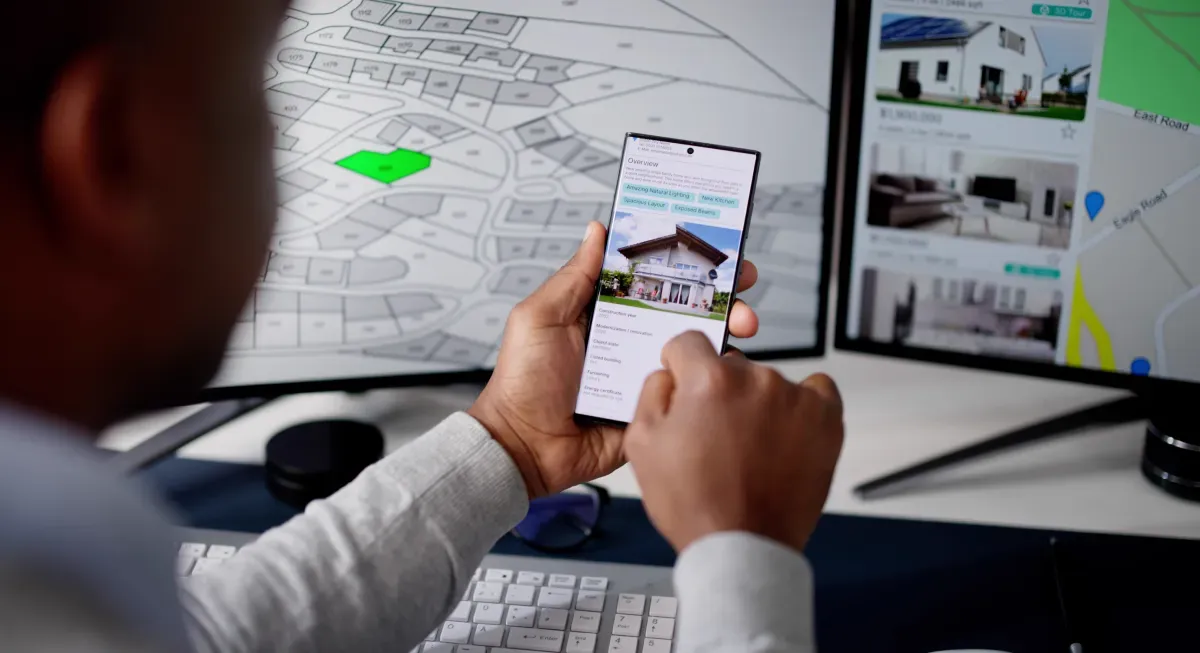
Digital marketing gives real estate agents the ability to reach buyers and sellers before they ever pick up the phone. The strategies below cover the channels that consistently produce visibility and leads, from your website and social profiles to email and listing platforms. Focus on the ones that fit your target audience first, then expand as you build momentum. Marketing for real estate agents is a step-by-step process.
Build a Professional Website
Your website is a credibility checkpoint. Before most clients reach out, they'll search for you online. A polished, up-to-date site signals professionalism; a weak or outdated one raises doubts. At a minimum, your site should include an about page, a contact page, client testimonials, and current listings through an MLS or IDX integration.
Show Up on Social Media Strategically
Not every platform is right for every agent. If your target clients skew older, Facebook is a strong choice. If you're targeting younger buyers or sellers, Instagram and TikTok reach them where they already spend their time. LinkedIn is a natural fit if you focus on investment or commercial properties.
Keep your content mix roughly 70-80% educational or community-focused and 20-30% promotional. Posts that perform well include:
- Neighborhood highlights
- Buyer and seller tips
- Local business shout-outs
- Behind-the-scenes content
Pure listings content tends to get ignored; content that builds trust gets shared.
Use Email Marketing to Stay Top of Mind
Email gives you a direct, algorithm-free line to your contacts. A monthly or quarterly newsletter keeps past clients thinking of you when a friend asks for a recommendation. Include local market updates, seasonal homeowner tips, and community news, content that adds genuine value without feeling like a sales pitch.
Optimize Your Google Business Profile
A complete Google Business Profile costs nothing and helps you appear in local searches and on Google Maps. Add photos, keep your contact information current, and ask satisfied clients to leave reviews. Potential clients often check reviews before making their first call.
List Properties on Major Platforms
Zillow attracts roughly 235 million unique visitors each month. Beyond Zillow, Trulia, Redfin, and Realtor.com all offer additional exposure. Use your best photography on every listing; professional images make a measurable difference in how many buyers click through.

Relationship-Based Marketing That Still Wins Business
No amount of digital marketing replaces personal connection. Over 90% of buyers would use their agent again or recommend them to others. Referrals don't happen by accident; they happen because you stayed in touch and made clients feel valued long after closing.
Ask past clients directly for referrals. Post testimonials on your website and social profiles. These aren't passive tactics; they require consistent, proactive effort. Pairing a strong referral network with a steady digital presence creates a self-reinforcing loop where your marketing and your reputation work together.
Local networking matters, too. Joining a chamber of commerce, sponsoring a community event, or partnering with a local business for an open house all put your name in front of people who are already invested in the neighborhood you serve.
Physical Marketing: The Channel Most Agents Underestimate
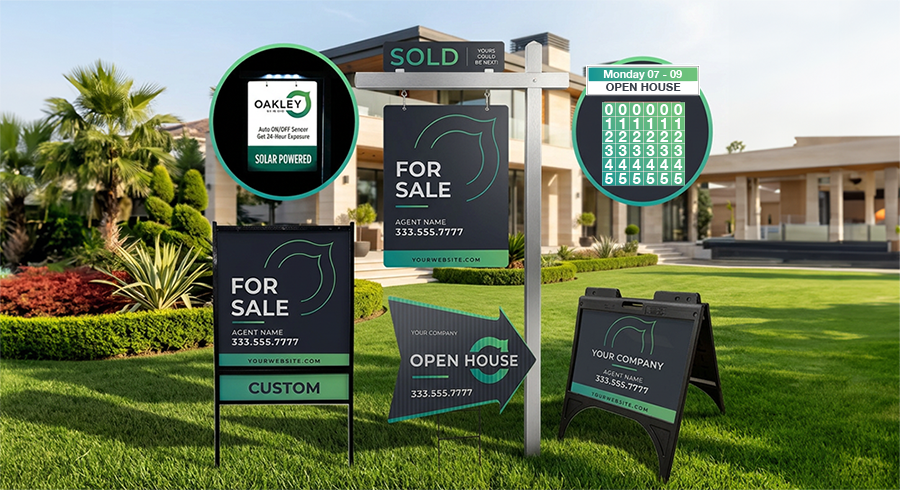
Digital marketing gets most of the attention, but physical marketing is still one of the most powerful tools a Realtor has, especially at the local level. Here's why: A yard sign works 24 hours a day, seven days a week, for every person who drives or walks past that property.
The physical marketing materials that consistently perform for real estate agents include:
- Yard signs and sign panels — Your most visible listing asset. A well-branded sign plants your name in a neighborhood and signals activity to potential sellers nearby.
- Riders — "Just Listed," "Open House," "Under Contract," and "Sold" riders add context and urgency to your yard signs without replacing them.
- Directional signs — Guide buyers to open houses and keep foot traffic moving toward your listings.
- Business cards — A well-designed card is a physical representation of your brand. After a networking event or open house, it's what people hold in their hands when they decide whether to call.
- Listing brochures — Leave-behind materials that give buyers something tangible to reference after they walk out the door.
- Postcards and direct mail — Targeted mailers to specific neighborhoods can generate seller leads, especially after a recent "Sold" in the area.
Physical and digital marketing aren't competing channels; they work best together. A prospect might see your yard sign, search your name online, check your Google reviews, and then call. Every touchpoint plays a role.
How To Market Yourself in Real Estate: A Practical Starting Point
If you're looking to build or rebuild your marketing approach, start with a clear system rather than scattered tactics. Here's a simple framework:
- Define your brand and target audience — Who do you serve best, and what makes you the right agent for them?
- Set up your foundation — A professional website, a complete Google Business Profile, and consistent branding across all materials.
- Choose two or three marketing channels — Master them before expanding. Consistency on fewer channels outperforms scattered effort across many.
- Invest in physical marketing — Quality signs, riders, and print materials that reflect your brand wherever your listings live.
- Nurture your referral network — Stay in touch with past clients through email, personal notes, and social media.
- Track and adjust — Measure what's working. Website traffic, email open rates, and lead conversions all point to where your marketing is gaining traction.
Get the Signs That Make Your Marketing Work Harder
Your listing signs are often the first thing a potential seller sees from you. At Oakley Signs, we've been helping real estate agents put a professional face on their brand for decades. We carry custom yard signs, riders, directional signs, and more, built to last and designed to get noticed. Browse our full selection to find the right products for your marketing plan.
Shop NowFrequently Asked Questions About Real Estate Agent Marketing
How much should a real estate agent budget for marketing?
The rule of thumb is to spend between 10% and 15% of your gross commission income on marketing. New agents often invest a higher percentage early on to build visibility. Physical marketing materials like signs and print tend to have a lower per-impression cost than paid digital advertising, making them a smart investment at any budget level.
Do real estate agents need to follow specific advertising rules?
Yes. Real estate advertising is regulated at the state and federal levels. Most states require agents to include their licensed name, brokerage name, and, in some cases, their license number in any advertising, including digital ads, social posts, and printed materials. Equal housing opportunity laws also govern how you can describe properties and target audiences. Check with your state's real estate commission for the specific disclosure requirements in your market.
How long does it typically take for real estate marketing to produce results?
Most marketing channels require three to six months of consistent effort before producing measurable results. Organic SEO, social media growth, and email list building all compound over time rather than delivering immediate returns. Paid advertising and referral outreach can produce faster results but still depend on a foundation of trust and brand recognition. Agents who expect immediate returns from marketing often quit too early; consistency is the most important variable.